Home / Our thinking / Insights /

Table of contents
Key takeaways from the Ministry of Defence and NashTech webinar series
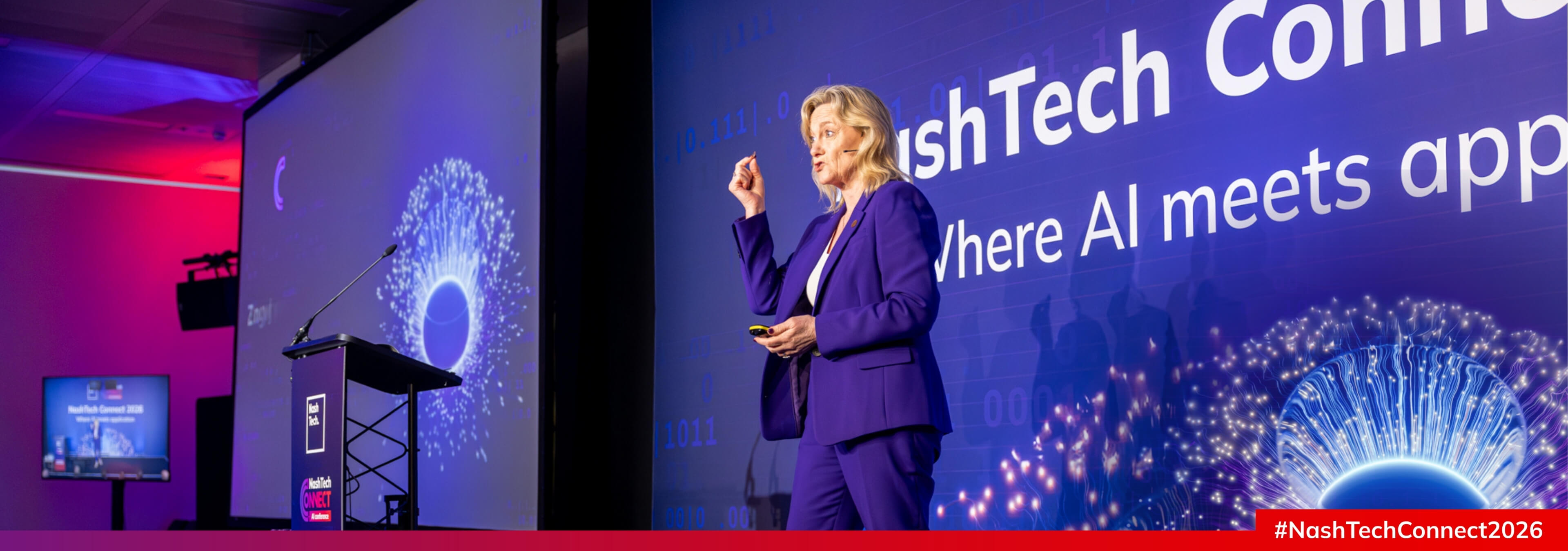
Nearly 100 attendees from across the Ministry of Defence (MOD) joined the final instalment of a three-part webinar series delivered in collaboration with NashTech. Titled “Do different, do better: AI in action”, the session brought together defence leadership and industry expertise to explore how artificial intelligence is moving from ambition to application.
Opening the session, Air Commodore Nick Huntley—responsible for people, innovation, experimentation and research—set the tone with a clear message: AI is no longer a future consideration. It is already reshaping how organisations analyse, decide and act.
From months to minutes: AI in practice
One of the most compelling examples shared was the use of large language models (LLMs) to analyse a decade’s worth of MOD activity data. What would traditionally take a person up to six months was completed in a fraction of the time.
The outcome was not just faster, it was deeper:
- 32 themes identified across years of activity
- Clear patterns and overlaps surfaced
- Insights ready to inform better support strategies
- 96% say AI is accelerating their technology strategy; and
- 85% are treating it as an immediate priority
- Measure outcomes consistently
- Embed AI into workflows, not just tools
- Prioritise change management from the outset
- 70% of organisations identify recruiting and retaining AI-skilled staff as a major barrier
- 50% of digital and data roles went unfilled in 2024
- An estimated £45bn is lost annually due to unrealised productivity gains
- 97% of technology leaders report resourcing concerns
- 43% cite limited in-house expertise as a key blocker
- Fewer than 60% have consistent governance practices in place
- 15–50% reductions in task completion time across multiple knowledge-based roles
- Limited evidence of economy-wide job losses so far
- Early disruption concentrated in entry-level and junior cognitive roles
- AI-related skills are commanding a wage premium
- Roles requiring multiple AI-adjacent skills can pay up to 15% more
- 63% of senior leaders believe AI projects are exceeding expectations
- Only 39% of mid-level managers agree
Human in the loop oversight remained essential, but the scale and speed of analysis fundamentally changed what was possible. More importantly, it enabled teams to move quickly from insight to action, working on new improvement opportunities that would otherwise have remained hidden.
But how else are businesses using AI?
Chris Weston, Senior Technology Consultant at NashTech and NashTech’s Client Director, Stuart Simpson, introduced findings from the organisation’s latest research, highlighting a familiar tension: while AI ambition is high, execution often lags behind.
Stuart said, “Most organisations begin with a strong idea but attempt to retrofit it into existing systems, often leading to expensive, complex customisation rather than meaningful transformation.”
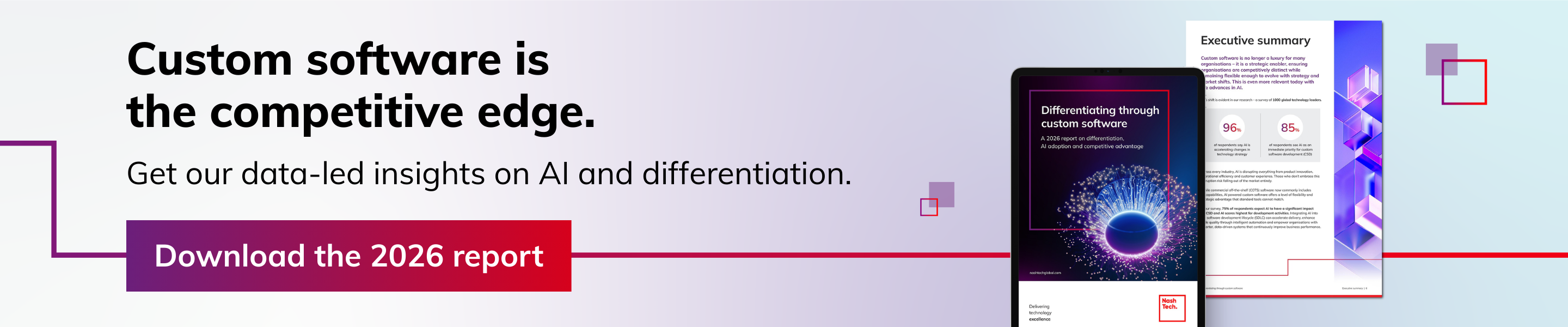
The NashTech data tells a clear story:
- 96% say AI is accelerating their technology strategy; and
- 85% are treating it as an immediate priority
Yet adoption at scale remains limited. The challenge is no longer AI awareness, it is execution.
But, why?
A key theme throughout the session was the difficulty of translating individual productivity gains into organisation-wide value.
AI can save minutes at a task level, but without structure, those gains rarely scale.
To truly benefit, organisations need to:
- Measure outcomes consistently
- Embed AI into workflows, not just tools
- Prioritise change management from the outset
Too often, change management is overlooked. In reality, it is the difference between experimentation and transformation.
The real blockers: skills, not systems
Despite the rapid evolution of AI technology, the biggest barriers aren’t to do with the technology itself; they are with the people, or rather, the skills and adoption of the people.
Across both government and industry, the same structural challenges persist.
In the public sector:
- 70% of organisations identify recruiting and retaining AI-skilled staff as a major barrier
- 50% of digital and data roles went unfilled in 2024
- An estimated £45bn is lost annually due to unrealised productivity gains
Industry faces similar issues:
- 97% of technology leaders report resourcing concerns
- 43% cite limited in-house expertise as a key blocker
- Fewer than 60% have consistent governance practices in place
The difference? Industry can often pay its way out of the skills gap. The public sector cannot, making the challenge more structural than temporary.
Workforce transformation, not apocalypse
One of the most reassuring insights from the session was that AI is not driving widespread job loss, at least not yet. Instead, it is reshaping how work is done.
Current evidence shows:
- 15–50% reductions in task completion time across multiple knowledge-based roles
- Limited evidence of economy-wide job losses so far
- Early disruption concentrated in entry-level and junior cognitive roles
At the same time, the market is adapting:
- AI-related skills are commanding a wage premium
- Roles requiring multiple AI-adjacent skills can pay up to 15% more
The pattern is familiar. Like previous technological shifts, disruption is uneven, affecting specific roles first while creating new opportunities alongside them.
Bridging the perception gap
Another challenge lies in how success is experienced across organisations.
- 63% of senior leaders believe AI projects are exceeding expectations
- Only 39% of mid-level managers agree
This gap highlights a disconnect between strategy and delivery. While leadership sees progress, those implementing AI often face the realities of integration challenges, unclear governance and competing priorities.
Closing this gap will be critical to sustaining momentum.
Three questions every organisation should ask
As the session drew to a close, one message stood out:
AI will amplify whatever operating model you already have—good or bad.
With that in mind, organisations were left with three critical questions to consider:
1. Are you truly ready?
If AI were deployed into your core services today, would your data, governance and workforce support it?
2. Where are you relying on the generic?
Are outdated processes or off-the-shelf tools limiting what should be distinctive about what you deliver?
3. Are you measuring success consistently?
Do the people commissioning AI and those delivering it define success in the same way?
Final thoughts
The final webinar in this series made one thing clear: AI is not a technology challenge, it is an organisational one. But it’s also a huge opportunity.
Success will depend less on the tools organisations adopt, and more on how they align people, processes and governance around them.
The opportunity is significant. But so is the responsibility to get it right.
To learn more about the MOD seminar series content, visit:
MOD seminar #1 – Do different, do better: AI in action
MOD seminar #2 – Do different, do better: empowering people for AI enabled support
Continue the conversation
If these insights resonate, and you’re exploring how to move from AI ambition to real-world impact, there’s more to uncover.
Explore our thinking for the latest research, insights and practical guidance on scaling AI effectively and turning potential into performance. For support with your AI strategy, speak with an expert today.
Suggested articles